


Introduction: The Extraordinary Journey of Narendra Modi
Narendra Modi’s journey from a small town in Gujarat to becoming the Prime Minister of India is one of the most remarkable political stories of modern times. Born into a modest family in Vadnagar, Gujarat, Modi’s early life was shaped by simplicity, discipline, and experiences that connected him with ordinary citizens.
Long before he became a national leader and represented India on global platforms, Narendra Modi spent decades working at the grassroots level. His journey moved from social organization and political strategy to becoming the Chief Minister of Gujarat and eventually leading the world’s largest democracy.
Since becoming Prime Minister in 2014, Narendra Modi has introduced several major initiatives focused on economic development, digital transformation, infrastructure growth, financial inclusion, welfare programs, and India’s increasing role in global affairs. His leadership has attracted both strong support and significant debate, making him one of the most influential and widely discussed political figures of contemporary India.
This detailed Narendra Modi biography explores his complete life journey — including his childhood, education, political career, Gujarat years, Prime Ministerial leadership, achievements, challenges, leadership style, and the impact he has made on India’s political landscape.
Childhood in Vadnagar: The Foundation Years
Narendra Damodardas Modi was born on 17 September 1950 in Vadnagar, a historic town located in present-day Mehsana district of Gujarat. At the time of his birth, India was still in the early years of independence, and much of the country was experiencing social and economic transformation.
Modi was born into a family with modest financial circumstances. His father, Damodardas Mulchand Modi, ran a small tea business, while his mother, Heeraben Modi, was known for her simplicity, discipline, and strong family values.
He was the third among six children in the family. Like many families in small Indian towns during that period, the Modi household followed a simple lifestyle where hard work, responsibility, and community relationships played an important role.
The environment in which Narendra Modi grew up was very different from the political world he would later enter. There were no signs of privilege, political connections, or inherited influence. His early life was shaped by everyday experiences — helping his family, interacting with people from different backgrounds, and observing the struggles and aspirations of ordinary citizens.
These early experiences later became an important part of his political narrative. Throughout his career, Modi has frequently spoken about his humble beginnings and his understanding of the challenges faced by common people.
The Influence of Family and Early Responsibilities
Narendra Modi’s childhood was shaped significantly by his parents.
His mother, Heeraben, was known for her disciplined lifestyle and dedication to family responsibilities. The values of simplicity, cleanliness, self-control, and perseverance that he observed at home influenced his personal habits throughout his life.
His father introduced him to the realities of small business and public interaction. Helping with the family tea business exposed young Narendra to conversations with people from different walks of life. These interactions helped him understand the concerns, hopes, and difficulties of ordinary citizens.
One of the most widely discussed aspects of his childhood is his involvement in his father’s tea-selling work. According to Modi’s own accounts, he helped his father sell tea at the Vadnagar railway station. This experience later became an important symbol in his public image, representing his connection with common people and his journey from a modest background to national leadership.
Beyond the economic challenges, these years developed qualities that would later define his working style:
- A strong work ethic
- Independence from an early age
- Comfort in interacting with different groups of people
- Ability to adapt to difficult circumstances
- Interest in public life
School Life and the Development of Leadership Qualities
Narendra Modi completed his schooling in Vadnagar. During his school years, he was not only focused on academics but also actively participated in extracurricular activities.
He developed an early interest in:
- Public speaking
- Debates
- Theatre
- Social activities
- Reading and discussions
His participation in debates and stage performances helped him develop confidence in communication. This ability to connect with audiences would later become one of the strongest features of his political career.
Teachers and people who knew him during his younger years have often described him as a disciplined student with a strong sense of curiosity. He showed interest in understanding society and discussing issues beyond regular classroom learning.
A significant aspect of his personality during these years was his willingness to take initiative. Whether participating in school activities or community events, he often showed an inclination toward organizing and leading.
These early experiences became the foundation for skills that would later prove valuable in politics — communication, organization, and public engagement.
A Search for Purpose Beyond Conventional Life
After completing his schooling, Narendra Modi entered a phase of personal exploration. Unlike many young people who immediately follow traditional career paths, he spent time reflecting on his interests, beliefs, and future direction.
During his youth, he developed a deeper interest in spirituality, Indian philosophy, and social service. He travelled to different parts of India, gaining exposure to the country’s diverse cultures, traditions, and social realities.
These experiences influenced his understanding of India as a nation with enormous diversity and complexity. The interactions and observations from this period contributed to his interest in public service and social organization.
This phase of his life is often described as a period of self-discovery. It helped shape his personality, strengthening his commitment to discipline and service.
Education and Interest in Politics
Narendra Modi pursued higher education while continuing to develop his interest in social and political issues.
He studied political science and gained knowledge about political systems, governance, and society. His academic interests aligned with his growing curiosity about India’s development and public administration.
While education was an important part of his journey, his practical experiences outside the classroom played an equally significant role in shaping his worldview.
His understanding of politics did not develop only through textbooks. It evolved through:
- Community interaction
- Organizational activities
- Travel experiences
- Social observation
- Volunteer work
This combination of theoretical knowledge and practical exposure later influenced his approach toward governance and leadership.
Association with the Rashtriya Swayamsevak Sangh (RSS)
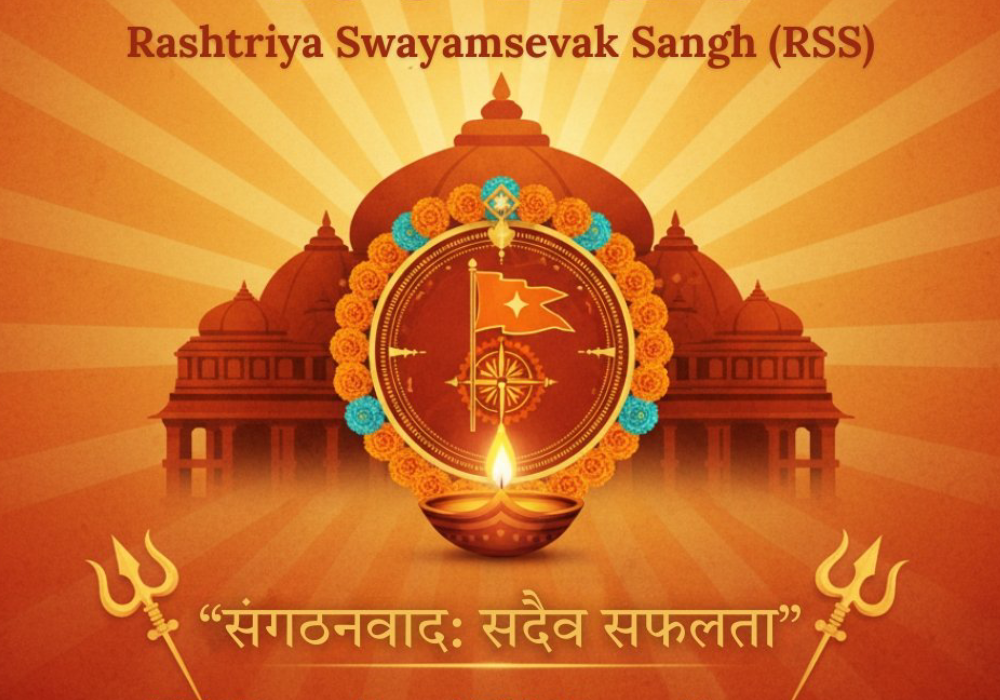
One of the most important turning points in Narendra Modi’s early life was his association with the Rashtriya Swayamsevak Sangh (RSS).
As a young volunteer, Modi became involved in the organization’s activities and gradually took on greater responsibilities. The RSS provided him with a structured environment where he learned organizational discipline, teamwork, and social engagement.
During this period, he developed skills that would later become central to his political career:
Organizational Management
Working within a volunteer-based structure taught him how to coordinate people, plan activities, and manage large groups.
Grassroots Engagement
He gained experience interacting directly with communities and understanding local issues.
Communication Skills
Regular participation in organizational activities helped strengthen his ability to communicate ideas effectively.
Leadership Development
The disciplined environment encouraged responsibility, commitment, and long-term planning.
His years with the RSS created the foundation for his future role as a political organizer.
Supporters consider this period essential in developing his leadership qualities, while critics have examined how this ideological background influenced his political approach. Nevertheless, the role of the RSS in shaping his organizational career remains an important part of his biography.
Entering the World of Politics Through the BJP
Narendra Modi’s formal political journey began when he became associated with the Bharatiya Janata Party (BJP) during the 1980s.
At this stage, he was not an elected leader but an organizer working behind the scenes. His responsibilities involved strengthening party structures, coordinating campaigns, and connecting with workers at the grassroots level.
The political environment of India during the 1980s and 1990s was undergoing major changes. The BJP was expanding its presence, and political competition was becoming increasingly dynamic.
Modi played an important role in organizational activities, where he gained experience in:
- Election planning
- Volunteer management
- Political communication
- Campaign strategy
- Party expansion
Unlike leaders who rise through family connections or immediate electoral success, Modi’s early political growth came through years of organizational work.
This background influenced his later leadership style, which emphasized planning, discipline, and direct public communication.
Rise as a Political Strategist
During the late 1980s and 1990s, Narendra Modi gradually became recognized as an effective political strategist.
His ability to organize campaigns and manage complex political activities helped him gain responsibilities within the BJP.
Several qualities contributed to his rise:
Attention to Detail
Modi developed a reputation for carefully planning political programs and campaigns.
Strong Organizational Networks
He focused on building connections between party leadership and grassroots workers.
Adaptability
He showed an ability to adjust strategies according to changing political circumstances.
Communication Focus
He understood the importance of presenting political messages in a simple and direct manner.
These skills helped him move from being a party organizer to becoming a prominent political figure.
Narendra Modi as Chief Minister of Gujarat: The Beginning of a National Leadership Image
In 2001, Narendra Modi reached a major milestone when he became the Chief Minister of Gujarat.
His appointment came at a challenging time for the state. Gujarat was recovering from the devastating Bhuj earthquake earlier that year, which had caused widespread destruction and required large-scale reconstruction.
As Chief Minister, Modi focused on rebuilding efforts, administrative reforms, infrastructure development, and economic growth.
His leadership approach emphasized:
- Faster decision-making
- Technology-based governance
- Industrial development
- Investment promotion
- Administrative efficiency
The Gujarat years became a defining period of his political career because they shaped the image that would later help him gain national recognition.
The Gujarat Development Model
During Narendra Modi’s tenure as Chief Minister, Gujarat gained attention for its economic performance and investment environment.
The phrase “Gujarat Model of Development” became widely discussed in political and economic circles.
Supporters highlighted improvements in areas such as:
- Industrial growth
- Electricity availability
- Road infrastructure
- Manufacturing expansion
- Investment opportunities
- Administrative reforms
Initiatives such as the Vibrant Gujarat Global Summit helped promote Gujarat as a destination for domestic and international investment.
The summit brought together business leaders, investors, policymakers, and global representatives, increasing Gujarat’s visibility on economic platforms.
At the same time, debates continued regarding whether economic growth reached all communities equally and how development should be measured beyond industrial expansion.
Challenges and Controversies During Gujarat Leadership
Narendra Modi’s years as Gujarat Chief Minister were also marked by significant challenges and controversies.
The most widely discussed event was the communal violence in Gujarat in 2002. The issue became a major point of political debate and has remained part of discussions about Modi’s political career.
Various investigations, court proceedings, and official processes examined different aspects of the events and the government’s response. Supporters and critics have interpreted this period differently, leading to continuing discussions among political observers and analysts.
A complete understanding of Modi’s Gujarat leadership requires acknowledging both aspects of this period — the development initiatives that shaped his administrative reputation and the controversies that influenced public debate about his leadership.
From Gujarat Leader to National Figure
By the early 2010s, Narendra Modi had become one of the BJP’s most recognized leaders.
His reputation as an administrator focused on development and governance helped him gain national attention. Many people viewed him as a leader who could provide decisive leadership and economic direction, while opponents questioned various aspects of his record.
In 2013, the BJP selected Narendra Modi as its prime ministerial candidate for the 2014 general election.
The election campaign focused on themes of:
- Development
- Economic growth
- Governance reform
- Employment opportunities
- Strong leadership
Modi’s campaign combined traditional political rallies with extensive use of technology and digital communication.
The result was historic. The BJP secured a clear majority in the Lok Sabha, and Narendra Modi became the Prime Minister of India on 26 May 2014.
This marked the beginning of a new chapter — one in which the leader from Vadnagar moved from state politics to leading the world’s largest democracy.
Narendra Modi Becomes Prime Minister of India: A New Chapter Begins
When Narendra Modi took oath as the Prime Minister of India on 26 May 2014, it marked the beginning of a new phase not only in his personal journey but also in India’s political landscape.
The journey from Vadnagar to the Prime Minister’s Office had taken more than six decades. It was shaped by his childhood experiences, years of organizational work, political struggles, and his long tenure as the Chief Minister of Gujarat. However, becoming Prime Minister brought an entirely different responsibility — leading a nation of more than a billion people with diverse social, economic, and regional challenges.
The 2014 general election gave Narendra Modi and the Bharatiya Janata Party (BJP) a decisive mandate. The BJP secured a majority in the Lok Sabha, becoming the first single party after three decades to achieve this milestone. For many voters, the election represented a desire for stronger leadership, economic growth, better governance, and a change from the political environment of the previous decade.
When Modi entered office, he presented a vision centered around development, administrative efficiency, transparency, and citizen participation. The philosophy of “minimum government, maximum governance” became one of the defining themes of his administration.
His approach was influenced by the experiences he had gained during his years in Gujarat. He emphasized faster decision-making, technology-driven governance, infrastructure development, and direct communication with citizens.
However, governing India required balancing ambitious reforms with the realities of a complex democracy. Over the next decade, Modi’s leadership would be defined by major policy decisions, economic reforms, welfare initiatives, diplomatic efforts, and debates over the direction of the country.
The First Term (2014–2019): Building a New Governance Framework
The first term of Narendra Modi’s government focused on creating a foundation for economic transformation and improving the delivery of government services.
Rather than focusing only on large economic reforms, the government also emphasized improving everyday connections between citizens and the state. Financial access, digital services, sanitation, housing, energy access, and infrastructure became important areas of focus.
A central idea behind many initiatives was that technology could help reduce gaps between government programs and ordinary citizens.
Financial Inclusion and Empowerment Through Jan Dhan Yojana
One of the earliest initiatives of the Modi government was the Pradhan Mantri Jan Dhan Yojana, launched in 2014.
For decades, a large section of India’s population remained outside the formal banking system. Many people, particularly in rural areas, had limited access to bank accounts, credit facilities, and organized financial services.
The Jan Dhan initiative aimed to change this by encouraging widespread access to bank accounts and financial services.
The importance of the program went beyond opening bank accounts. It became part of a larger approach that combined:
- Banking access
- Digital identity systems
- Direct transfer of government benefits
The idea was to create a system where welfare support could reach citizens more efficiently while reducing dependence on traditional administrative processes.
Supporters viewed this as a major step toward financial empowerment, while discussions continued regarding account usage, financial literacy, and long-term economic participation.
Swachh Bharat Mission: Turning Cleanliness Into a National Movement
In 2014, Narendra Modi launched the Swachh Bharat Mission, one of the most visible public campaigns of his first term.
The campaign focused on improving sanitation and encouraging behavioural change regarding cleanliness.
For Modi, cleanliness was not only an infrastructure issue but also a social responsibility. Through public speeches, media campaigns, and citizen participation, the government attempted to make sanitation a national conversation.
The initiative focused on:
- Expanding sanitation facilities
- Reducing open defecation
- Creating awareness about hygiene
- Encouraging community participation
The campaign received significant public attention and involved people from different sections of society.
Supporters considered it an important step toward improving sanitation awareness. Critics, however, highlighted challenges related to long-term maintenance, behavioural change, and implementation quality.
The broader significance of Swachh Bharat was that it attempted to transform a government program into a nationwide social movement.
Digital India and the Technology-Driven Vision
Technology became one of the strongest themes of Narendra Modi’s leadership.
The Digital India initiative, launched in 2015, reflected his belief that digital infrastructure could become a foundation for economic and social development.
The goal was to create a more connected India where citizens could access government services more easily.
Over time, digital transformation influenced several areas:
- Online government services
- Digital payments
- Technology-based businesses
- Public service delivery
- Digital communication
India’s rapid expansion of digital payment systems became one of the most visible examples of this transformation.
Modi often presented technology not simply as a convenience but as a tool for transparency, inclusion, and economic opportunity.
Make in India and the Search for Manufacturing Growth
Another major initiative launched during Modi’s first term was Make in India.
The campaign aimed to increase manufacturing activity, attract investment, and position India as a global production hub.
The initiative reflected a broader economic vision: that India needed stronger manufacturing capabilities to create jobs and compete globally.
The government focused on sectors including:
- Electronics
- Defence manufacturing
- Automobiles
- Infrastructure
- Industrial production
While the campaign helped increase attention toward India’s manufacturing potential, debates continued regarding employment generation, investment levels, and the pace of industrial expansion.
Nevertheless, Make in India became an important symbol of the government’s economic ambitions.
Goods and Services Tax: Transforming India’s Tax System
One of the most significant economic reforms during Modi’s first term was the implementation of the Goods and Services Tax (GST) in 2017.
Before GST, India had multiple indirect taxes administered by different governments. The reform attempted to create a unified taxation system across the country.
The objective was to:
- Simplify taxation
- Improve compliance
- Create a common national market
- Reduce complexity for businesses
The introduction of GST represented a major structural change in India’s economy.
However, its implementation also created challenges, particularly for small businesses adjusting to new procedures and systems.
Over time, GST became a central part of India’s taxation framework and one of the most important economic reforms of Modi’s tenure.
Demonetization: One of the Most Debated Decisions
In November 2016, Narendra Modi announced the withdrawal of ₹500 and ₹1,000 currency notes from circulation.
The government stated that the decision was aimed at addressing:
- Black money
- Counterfeit currency
- Illegal financial activities
The announcement created immediate disruption because cash played a major role in India’s economy, especially among small businesses and informal workers.
Supporters argued that demonetization encouraged digital payments and increased financial transparency. Critics argued that it caused economic difficulties and that its benefits did not fully justify the disruption.
The decision remains one of the most debated moments of Modi’s first term and continues to generate discussion among economists and policymakers.
Infrastructure Development: Building a Connected India
Infrastructure development became a major priority under Narendra Modi’s leadership.
The government focused on expanding:
- Highways
- Railways
- Airports
- Urban transportation
- Rural connectivity
- Digital infrastructure
The underlying vision was that better connectivity would support economic growth, improve mobility, and strengthen India’s competitiveness.
Large-scale infrastructure projects also became a visible representation of Modi’s development-focused governance model.
Second Term (2019–2024): Expansion, Transformation, and Challenges
The 2019 general election strengthened Narendra Modi’s position as Prime Minister. The BJP returned with an even larger mandate, allowing him to begin his second term with significant political support.
This period was marked by major constitutional decisions, welfare expansion, global diplomacy, economic challenges, and one of the biggest crises of the modern era — the COVID-19 pandemic.
Article 370 and Jammu and Kashmir Reorganization
In August 2019, the government made a historic decision regarding Article 370, which provided special status to Jammu and Kashmir.
The decision removed the special constitutional provisions and reorganized the region into two Union Territories.
Supporters described the move as a step toward greater integration and equal application of laws.
Critics raised concerns about the political process, restrictions, and the broader implications of the decision.
The issue remains one of the most significant constitutional developments during Modi’s second term.
Ayushman Bharat and Healthcare Expansion
Healthcare became another important area of focus during Modi’s second term.
The Ayushman Bharat program aimed to improve access to healthcare services for millions of eligible families by providing financial support for medical treatment.
The broader healthcare approach included:
- Expanding healthcare coverage
- Strengthening medical infrastructure
- Improving access in underserved areas
The initiative represented an attempt to address one of India’s major social challenges — ensuring affordable healthcare access.
COVID-19 Pandemic: Leadership During an Unprecedented Crisis
The COVID-19 pandemic became one of the greatest challenges faced by Narendra Modi’s government.
India, like countries worldwide, faced enormous pressure on healthcare systems, businesses, employment, and daily life.
The government introduced nationwide restrictions in 2020 to control the spread of the virus. The decision generated debate regarding economic impact and implementation challenges.
Later, India launched one of the world’s largest vaccination campaigns.
The pandemic period became an important test of government capacity and crisis management, with both achievements and criticisms shaping public discussions.
Narendra Modi’s Foreign Policy and India’s Global Role
One of the most visible changes during Narendra Modi’s leadership has been India’s increased global engagement.
Modi placed strong emphasis on diplomatic outreach, frequently engaging with global leaders and international organizations.
His foreign policy approach focused on:
- Strengthening relationships with major economies
- Increasing India’s influence in global forums
- Promoting investment opportunities
- Expanding strategic partnerships
His government also emphasized India’s role as a rising global power.
The increased visibility of India on international platforms became a major theme of Modi’s leadership.
G20 Presidency: A Moment of Global Recognition
India’s G20 Presidency in 2023 became one of the most significant diplomatic milestones during Modi’s tenure.
Hosting the G20 Summit allowed India to present itself as a major participant in global decision-making.
The summit focused on issues such as:
- Economic cooperation
- Sustainable development
- Digital transformation
- Climate challenges
- Global partnerships
For Modi, the event represented an opportunity to highlight India’s economic growth, cultural identity, and role in shaping international discussions.
Third Term as Prime Minister: A New Phase
Following the 2024 general elections, Narendra Modi began his third term as Prime Minister.
His third term represents a different political environment compared with his earlier governments. While continuing to focus on development, infrastructure, technology, and economic growth, his administration also faces challenges related to employment, economic inequality, global uncertainties, and governance expectations.
The coming years will play an important role in determining how his leadership is viewed historically.
Narendra Modi’s Leadership Style and Political Influence
Beyond specific policies, Narendra Modi’s leadership style has become a significant subject of discussion.
Direct Communication With Citizens
Modi has frequently used speeches, digital platforms, and radio programs such as Mann Ki Baat to communicate directly with citizens.
This approach has helped him maintain a strong connection with supporters.
Strong Decision-Making Approach
Supporters appreciate his ability to take major decisions, while critics debate the level of centralization in governance.
Technology-Focused Governance
Digital tools have remained central to his administration’s approach toward service delivery and public communication.
Election Strategy and Public Outreach
Modi’s campaigns have often combined traditional political methods with modern technology, social media, and large-scale volunteer networks.
His political communication style has influenced how elections are conducted in contemporary India.
Achievements and Challenges: A Balanced Assessment
Narendra Modi’s tenure has included several major developments:
- Expansion of digital infrastructure
- Growth of digital payments
- Increased infrastructure investment
- Wider welfare program delivery
- Greater international visibility for India
- Stronger emphasis on technology and governance reforms
At the same time, his leadership has faced challenges and criticism related to:
- Economic policy decisions
- Employment concerns
- Social debates
- Political polarization
- Implementation challenges
A complete assessment of his leadership requires understanding both perspectives.
Narendra Modi’s Legacy in Indian Politics
Narendra Modi has already become one of the most influential figures in India’s political history.
His impact can be seen not only through policies and elections but also through changes in political communication, campaign strategy, governance style, and India’s global positioning.
Supporters view him as a leader who accelerated India’s development journey and strengthened its international presence.
Critics argue that his era raises important questions about economic priorities, institutions, and social issues.
Regardless of political opinions, Narendra Modi’s influence on contemporary India is undeniable. His decisions, leadership style, and political approach will continue to be studied by future generations seeking to understand the transformation of Indian politics in the 21st century.
Conclusion: The Journey From Vadnagar to Global Leadership
Narendra Modi’s life story is a journey of transformation — from a child growing up in a modest family in Vadnagar to becoming the Prime Minister of India and a recognized figure on the global stage.
His career reflects decades of organizational discipline, political determination, strategic thinking, and public engagement.
His supporters see him as a symbol of development-focused leadership and national ambition. His critics continue to question several aspects of his governance and policy choices.
History’s final assessment of any leader evolves over time. However, there is little doubt that Narendra Modi has played a defining role in shaping the political, economic, and diplomatic direction of modern India.
His journey remains one of the most significant political biographies of contemporary India.