


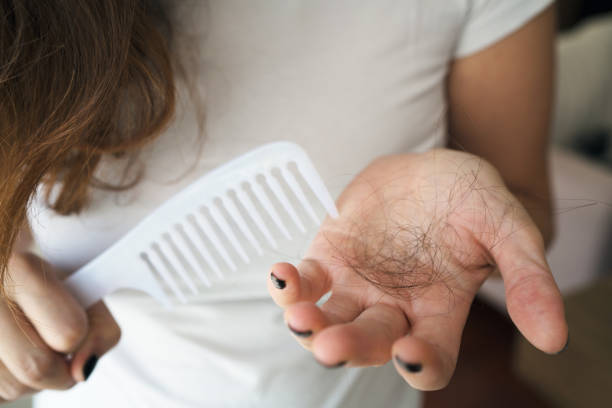
When noticeable shedding begins after starting a medication, Hair Loss Treatment in Dubai should begin with identifying the timing and possible relationship rather than immediately choosing a cosmetic procedure. Medication-related shedding can have different patterns, and the appropriate response depends on the medication history, the patient’s overall health, the scalp examination, and whether follicles remain capable of producing healthy hair.
Why Medication Changes Can Coincide With Hair Loss
Hair growth depends on a controlled cycle of growth, transition, and resting phases. Changes in the body’s internal environment can sometimes alter that cycle, potentially making increased shedding noticeable after a medication is introduced or changed.
The timing can be informative, but timing alone does not establish causation.
The Medication May Not Be the Only Factor
A new medication can coincide with other changes such as illness, stress, altered nutrition, hormonal fluctuations, or changes in routine.
If several factors changed around the same period, attributing all hair loss to one medication can lead to an incomplete assessment.
The Timing of Shedding Matters
Clinicians generally want to know when the medication was started, when the dose changed, and when the patient first noticed increased shedding.
A detailed timeline can help distinguish a potentially medication-associated episode from hair loss that was already developing.
Hair Loss Can Be Delayed
Hair biology does not always respond immediately to a physiological change.
For that reason, the onset of visible shedding may not occur on the same day as a medication change. This is one reason a complete timeline is more useful than relying on immediate cause-and-effect assumptions.
What to Do Before Changing a Medication
Patients should not stop, reduce, or replace a prescribed medication solely because they notice increased hair shedding.
The prescribing clinician should be involved in any decision concerning a medication.
Review the Medication History
Bring the names of current and recently changed medications to the hair-loss consultation.
The assessment should include prescription medicines, over-the-counter products, and other relevant substances that may have changed around the same period.
Document the Timeline
Record approximately:
- When the medication was started
- Whether the dose changed
- When shedding became noticeable
- Whether the shedding was sudden or gradual
- Which scalp areas appear affected
- Whether hair calibre has changed
- Whether there were other health or lifestyle changes
- Whether the medication is still being taken
This information can make the consultation substantially more useful.
Coordinate With the Prescribing Clinician
If a medication is suspected of contributing to hair loss, the appropriate response may involve continued treatment, monitoring, dose review, substitution, or another medically appropriate strategy.
The hair-restoration clinician and prescribing clinician may therefore need to consider the problem from different perspectives.
Medication-Related Shedding Versus Progressive Hair Loss
A temporary shedding episode and progressive follicular thinning are not the same problem.
A patient may also experience both at different times.
| Finding | Possible significance | Assessment focus |
|---|---|---|
| Increased shedding over a defined period | Possible temporary shedding process | Timeline and recent physiological changes |
| Gradual reduction in density | Possible progressive follicular change | Distribution and hair calibre |
| Localized bald patch | Different diagnostic pathway | Scalp and follicular examination |
| Short broken hairs | Hair-shaft damage | Hair structure and styling history |
| Finer replacement hairs | Possible follicular miniaturization | Follicular density and calibre |
| Scalp irritation or scaling | Possible scalp disorder | Scalp examination |
The table illustrates why the medication itself cannot provide the diagnosis.
Shedding Does Not Always Mean Permanent Loss
In some situations, increased shedding can occur without permanent destruction of follicles.
The important question is whether the follicles are capable of returning to their normal growth pattern and whether another process is simultaneously reducing density.
Progressive Thinning Needs Separate Attention
If the scalp becomes gradually less covered despite changes in shedding, clinicians may investigate whether an underlying progressive pattern is present.
This distinction can affect whether the focus should be observation, medical management, regenerative treatment, or surgical restoration.
How a Hair-Loss Consultation Investigates the Problem
The assessment should go beyond asking which medication was recently started.
Several clinical observations help determine the appropriate pathway.
Distribution of the Hair Loss
Diffuse shedding across the scalp presents differently from localized recession or crown thinning.
Mapping the affected areas helps establish whether the pattern is consistent with a temporary shedding process or another form of hair loss.
Hair Diameter
Changes in hair diameter can provide valuable information about follicular behavior.
If new hairs are consistently becoming finer, this may indicate a different process from temporary shedding alone.
Scalp Examination
The scalp should be checked for inflammation, scaling, irritation, tenderness, or other abnormalities.
An apparently healthy scalp does not exclude follicular hair loss, but abnormal findings can change the assessment.
Donor-Area Evaluation
If transplantation might eventually be considered, the donor region should be assessed even when the immediate concern is medication-related shedding.
This provides information about available follicular reserves and helps avoid premature surgical decisions.
When Hair Loss Treatment in Dubai Should Focus on Diagnosis First
The most important treatment can sometimes be understanding what is happening before starting a procedure.
Patients who recently experienced a medication change may require monitoring or additional medical evaluation rather than immediate follicular stimulation.
Establishing the Baseline
Photographs and clinical examination can document the starting level of density.
A baseline makes future comparison more meaningful and helps determine whether the situation is improving, stable, or continuing to progress.
Identifying Reversible Contributors
If another factor is contributing to shedding, addressing that factor may be more important than performing a cosmetic treatment.
Nutrition, recent illness, hormonal changes, scalp conditions, and medication history can all form part of the assessment.
Avoiding Unnecessary Procedures
Not every episode of shedding requires PRP, exosome therapy, stem-cell treatment, or transplantation.
The correct sequence is to establish the likely cause and then determine whether an intervention is justified.
When Follicular Support May Become Relevant
If the evaluation identifies persistent thinning and viable follicles remain, a clinician may discuss treatments intended to support existing hair.
The choice depends on the patient’s pattern, severity, health history, and treatment objectives.
PRP for Selected Patients
Platelet-rich plasma is prepared from the patient’s own blood and may be used in selected hair-restoration protocols.
It is generally considered as a follicular-support treatment rather than a solution for medication management itself. If a medication is contributing to the problem, that underlying issue still needs appropriate medical attention.
Exosome-Based Hair Therapy
Exosome-based treatment may be considered for selected patients seeking a non-surgical approach to support the scalp and existing follicles.
It should not be presented as a way to counteract every medication-related cause of hair loss. Patient selection remains central.
Stem Cell and G-Cell Approaches
Regenerative approaches may be discussed where follicles remain viable and additional follicular support is considered appropriate.
Their role depends on clinical findings and should not replace investigation of a potentially reversible underlying factor.
When Hair Transplantation Should Be Considered Carefully
Medication-related shedding does not automatically make someone a transplant candidate.
Surgery becomes more relevant when there is established permanent follicular loss and an appropriate donor supply.
Temporary Shedding Should Not Be Treated Like Permanent Baldness
A transplant is designed to move viable follicles into areas requiring restoration.
If the patient’s current reduction in density is potentially reversible, surgical intervention may be unnecessary.
Donor Reserves Matter
Every graft used in transplantation comes from a limited donor supply.
A responsible treatment plan should protect these resources and account for the patient’s future hair pattern.
The Native Hair Must Be Considered
Transplanted hair does not exist independently of the patient’s remaining native hair.
If native hair continues to thin, long-term planning becomes particularly important. This is why a diagnosis and progression assessment should precede surgery.
How Patients Can Monitor Hair Changes
Patients experiencing shedding after a medication change can create a simple record to support future assessment.
Useful documentation includes:
- Monthly standardized photographs
- Approximate medication start and change dates
- Changes in shedding intensity
- Areas where density appears reduced
- Changes in hair calibre
- Scalp symptoms
- Major changes in diet or health
- New hair treatments or styling practices
- Previous hair-restoration procedures
Use Consistent Photographs
The same camera angle, distance, lighting, and hair condition provide more meaningful comparisons.
A photograph taken under bright overhead lighting can make the scalp appear substantially more visible than an image taken under softer light.
Track Trends Rather Than Individual Days
Daily shedding varies naturally.
A broader trend over weeks or months is more informative than counting every hair lost on a particular day.
Dubai Patients May Have Additional Hair-Care Variables
Dubai’s climate and lifestyle can influence how patients perceive and manage changes in hair.
Frequent air conditioning, heat exposure, regular grooming, and intensive styling may affect the hair shaft and scalp environment, creating additional variables during a period when medication-related shedding is already being investigated.
Read More: Hair Transplant in Abu Dhabi for Hair Loss After Rapid Weight Loss
Separate Climate Effects From Follicular Changes
Environmental conditions can influence hair texture and scalp comfort.
They should not automatically be assumed to explain persistent reduction in follicular density.
Consider Treatment Downtime
For patients with demanding work and social schedules, recovery time can influence treatment preferences.
Non-surgical options may offer a different practical profile from transplantation, but suitability should still be determined clinically rather than based solely on convenience.
For patients seeking an individualized assessment, hair restoration and aesthetic care in Dubai can provide a starting point for discussing persistent thinning and appropriate treatment pathways.
Questions to Ask When Hair Loss Starts After Medication
Should I Stop the Medication?
Do not stop or alter a prescribed medication without discussing it with the clinician responsible for that medication.
Hair loss needs to be considered alongside the reason the medication was prescribed.
Does the Timing Prove the Medication Caused My Hair Loss?
No. Timing can be an important clue, but other physiological or environmental factors may have changed simultaneously.
A structured history and clinical assessment are needed before drawing conclusions.
Will My Hair Automatically Grow Back?
That depends on the underlying cause and whether another form of progressive hair loss is present.
Some shedding patterns may improve, while persistent follicular thinning requires a different approach.
When Should I Consider PRP or Another Treatment?
Treatment should generally follow assessment rather than precede it.
If viable follicles are present and persistent thinning is confirmed, regenerative or other hair-restoration options may be discussed according to the individual’s needs.
The Strategic Investment
Hair loss that appears after a medication change deserves careful evaluation, but it should not automatically be labelled a permanent side effect or treated with an immediate procedure. The timing, pattern, hair calibre, scalp condition, medical history, and other contributing factors all matter.
A thoughtful approach protects both the patient’s health and the remaining hair. For patients exploring Hair Loss Treatment in Dubai, Tajmeels Clinic provides a starting point for discussing persistent hair changes and developing a treatment strategy around the individual’s clinical findings.