


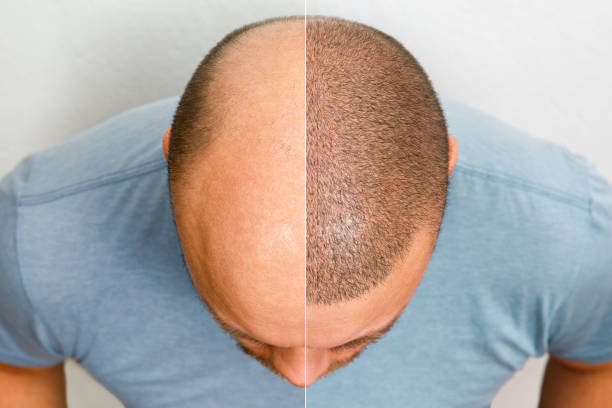
Hair restoration becomes more technically demanding when the goal is a natural-looking result rather than simple coverage. The surgeon must account for follicular characteristics, donor reserves, facial proportions, existing hair direction, scalp condition, and the long-term progression of hair loss.
Why Hair Transplant in Sharjah Requires Individual Hairline Planning
A transplant should not begin with a predetermined graft number or identical hairline template. The frontal zone is highly visible, and even small differences in follicle angle can affect how natural the finished result appears.
Hairline Shape and Facial Proportions
The hairline should complement the patient’s forehead, temples, facial structure, age, and existing pattern of recession. A very straight or aggressively low hairline can consume donor grafts that may be needed later as natural hair loss progresses.
A carefully designed frontal transition usually places finer follicular units toward the leading edge. Slight variations in placement help avoid an artificial row-like appearance.
Graft Direction and Exit Angle
Hair does not emerge vertically from the scalp. Its angle changes across the frontal hairline, temporal regions, mid-scalp, and crown.
During a Hair Transplant in Sharjah, recipient sites therefore need to follow the directional characteristics of the surrounding native hair. The surgeon considers the angle, orientation, depth, and spacing of each graft so that the transplanted hair can blend with existing strands.
Density Must Match the Available Donor Supply
More grafts do not automatically produce a better restoration. Donor hair is a finite biological resource, so graft allocation has to balance the frontal zone, mid-scalp, crown, and potential future loss.
A patient with extensive thinning may require strategic distribution rather than maximum density in one area. This approach can preserve donor capacity for future treatment if progressive hair loss continues.
Hair Transplant in Sharjah Techniques for Controlled Graft Placement
Modern transplantation can involve different extraction and implantation approaches. The appropriate technique depends on donor characteristics, hair-loss pattern, recipient area, graft requirements, and the surgeon’s assessment.
FUE Hair Transplant Sharjah
FUE, or Follicular Unit Extraction, removes individual follicular units from the donor region using a small punch. The harvested grafts are then prepared and placed into recipient sites.
The technique can be useful when the treatment plan requires controlled extraction without removing a linear strip of scalp. Donor management remains important because excessive extraction from a concentrated region can produce visible thinning.
DHI Hair Transplant
DHI uses an implanter device to place prepared follicular units directly into the recipient area. The approach allows the surgeon to control placement parameters such as direction, angle, and depth during implantation.
This can be particularly relevant when working around the frontal hairline or between existing hairs, where placement precision affects how the new follicles merge with native growth.
Hybrid Hair Restoration
Some patients have extensive loss or complex coverage requirements. A hybrid strategy can combine different extraction or implantation approaches according to the clinical objective.
The decision should be based on donor availability and recipient requirements rather than choosing a technique solely because it is marketed as newer or more advanced.
Hair Transplant in Sharjah: How Graft Planning Changes by Area
Different scalp regions have different visual and anatomical requirements. The frontal hairline generally requires finer, carefully angled grafts, while the crown has a naturally changing spiral direction.
| Treatment Zone | Main Planning Consideration | Typical Clinical Priority |
|---|---|---|
| Frontal Hairline | Angle, softness, facial proportion | Natural transition |
| Temples | Direction and recession pattern | Facial framing |
| Mid-Scalp | Density and integration | Coverage |
| Crown | Whorl direction and distribution | Blended appearance |
| Full Scalp | Donor conservation | Long-term allocation |
The number of grafts should therefore be determined after examining the scalp rather than estimated from photographs alone. Existing density, follicular unit composition, hair caliber, donor stability, and the size of the recipient zone can all change the treatment plan.
Read More: Alopecia Areata Treatment in Dubai for New Scalp Patches
Hair Transplant in Sharjah and the Dubai Environment
Patients moving between Sharjah and Dubai experience an environment that can place additional demands on scalp care during recovery. Outdoor heat and strong sunlight can increase discomfort around a healing scalp, while prolonged indoor air conditioning can contribute to a dry-feeling scalp environment.
Managing Heat and Sun Exposure
Direct sunlight should be limited during the early recovery period. A healing recipient area should not be exposed unnecessarily to intense outdoor heat, particularly during the first stage when grafts are stabilizing.
Patients should follow their surgeon’s instructions regarding when protective headwear can safely be introduced. Covering the scalp too early or allowing fabric to rub against freshly implanted grafts can interfere with proper healing.
Air Conditioning and Scalp Comfort
Dubai and Sharjah lifestyles often involve extended periods in air-conditioned environments. Dry indoor air can make the scalp feel uncomfortable after surgery, although it does not itself determine graft survival.
The priority is following the prescribed washing, hydration, saline, medication, and scalp-protection instructions rather than relying on cosmetic hair products during early recovery.
Returning to a Busy Professional Routine
Hair restoration patients may need to return to office meetings, travel, social events, or other professional commitments soon after treatment. Recovery planning should therefore account for temporary redness, swelling, scabbing, and changes in the appearance of the donor and recipient zones.
A realistic schedule helps patients avoid unnecessary pressure during the first few days after surgery.
Hair Transplant in Sharjah: The Consultation Determines the Strategy
A detailed consultation is where the technical plan is established. The surgeon should examine both the donor and recipient regions rather than treating visible baldness as an isolated cosmetic problem.
Donor Area Examination
The donor region is assessed for density, follicular-unit composition, hair caliber, and the distribution of healthy follicles. The surgeon also considers whether the donor area is likely to remain stable as the patient ages.
This matters because extracting too aggressively can compromise the appearance of the donor zone and limit options for future restoration.
Recipient Area Assessment
The recipient scalp is evaluated according to the pattern and severity of hair loss. Hairline recession, diffuse thinning, crown loss, scarring, and isolated bald patches may require different graft-placement strategies.
The surgeon can then determine whether the priority should be frontal reconstruction, density improvement, crown coverage, or a broader staged restoration.
Medical and Hair-Loss History
A consultation should also cover the patient’s medical history, medications, allergies, previous procedures, scalp conditions, and progression of hair loss.
Where active or unexplained hair loss is present, understanding its cause is important before committing a substantial number of donor grafts to transplantation.
For patients exploring broader hair-restoration options, information about hair restoration treatments and aesthetic care in Dubai can provide additional context before selecting a treatment pathway.
Hair Transplant in Sharjah: Recovery and Early Graft Protection
The early recovery period is focused on protecting newly implanted follicles while the scalp begins to heal.
First 24–48 Hours
Patients are generally advised to rest and keep the head elevated while sleeping. Touching, scratching, rubbing, or placing unnecessary pressure on the recipient region should be avoided.
Mild swelling, redness, tenderness, or itching can occur during this stage.
First Week
Small crusts may form around transplanted follicles. They should not be forcibly removed because aggressive scratching or picking can irritate the healing tissue.
Hair washing should follow the surgeon’s specific instructions, usually with a gentle technique and suitable shampoo rather than vigorous rubbing.
Weeks Two to Four
Temporary shedding of transplanted hairs can occur as follicles transition through their growth cycle. This can be visually concerning but does not necessarily mean the follicle has been lost.
The scalp gradually returns to a more normal appearance while the transplanted follicles enter a slower growth phase.
Months Three to Twelve
New growth develops progressively rather than appearing immediately after surgery. Early hairs may be fine before increasing in thickness as the growth cycle matures.
The final appearance depends on graft survival, native hair characteristics, donor quality, recipient-site design, and the natural progression of hair loss.
Hair Transplant in Sharjah: Clinical Factors That Influence Natural Results
Several technical variables work together to determine whether transplanted hair looks integrated rather than artificial.
Follicular Unit Selection
Single-hair grafts are often useful around the frontal edge because they can create a softer transition. Multi-hair grafts may be more useful farther behind the leading hairline when greater visual density is required.
Recipient-Site Design
The surgeon must create recipient sites that correspond to the intended growth direction. Poorly aligned sites can produce hair that points in an unnatural direction even when the follicles themselves are healthy.
Donor Management
A donor area should be treated as a limited resource. Extraction should be distributed appropriately rather than concentrated in one small region.
Long-Term Hair-Loss Planning
Transplanted follicles may provide long-lasting growth, but surrounding native hair can continue to thin. A treatment plan therefore needs to consider both the current bald area and the possibility of future progression.
Hair Transplant in Sharjah: Questions Patients Should Ask
How Is the Hairline Designed During Hair Transplant in Sharjah?
The surgeon evaluates facial proportions, existing hairline characteristics, temple recession, donor availability, and the patient’s age and long-term pattern of hair loss before designing the recipient zone.
Is FUE Suitable for Every Hair Transplant in Sharjah?
No. FUE can be appropriate for many patients, but suitability depends on donor density, follicular characteristics, the extent of hair loss, and the required graft strategy.
When Does New Hair Growth Start After Hair Transplant in Sharjah?
Visible growth commonly develops gradually over several months. Early transplanted hairs may shed before new growth becomes noticeable, with density continuing to improve as follicles mature.
Can the Crown and Hairline Be Treated Together?
They can be addressed within a broader restoration plan when donor availability allows. However, graft allocation between the frontal region and crown should be determined individually.
Does Dubai Heat Affect Hair Transplant Recovery?
Heat and direct sunlight can make early recovery less comfortable, so patients should protect the healing scalp according to their surgeon’s instructions and avoid unnecessary sun exposure during the initial recovery period.
Hair Transplant in Sharjah: The Strategic Investment
The value of hair restoration is determined by the quality of planning, not simply by the number of grafts transplanted. A well-designed Hair Transplant in Sharjah considers donor preservation, recipient anatomy, follicular-unit selection, hairline geometry, implantation direction, density, and the patient’s future hair-loss pattern.
For patients comparing treatment pathways, Tajmeels Clinic provides access to hair-restoration and aesthetic-care services where treatment planning can be tailored around individual scalp characteristics and restoration goals. The most appropriate approach should be established through an examination and consultation rather than selected from a technique name alone.