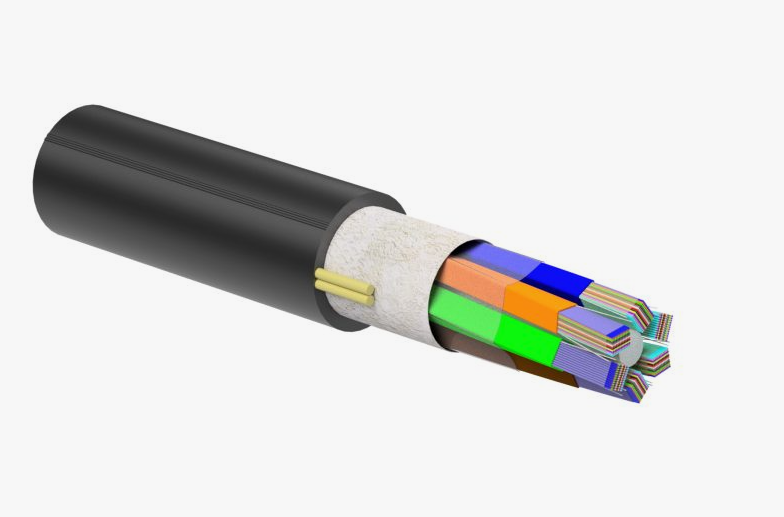
As global data consumption continues to grow, the need for efficient, scalable, and high-capacity networking solutions has become more important than ever. One of the key innovations supporting modern digital infrastructure is the high density fiber cable, designed to deliver maximum connectivity in minimal physical space. These cables are widely used in data centers, enterprise networks, and telecommunications systems where performance and organization are critical.
High density fiber technology helps simplify complex cabling systems while supporting large volumes of high-speed data transmission.
What Is High Density Fiber Cable?
A high density fiber cable is a type of fiber optic cable that contains multiple optical fibers bundled into a compact structure. Unlike traditional fiber cables that may require more physical space and multiple connections, high density fiber cables are designed to support a large number of fiber strands within a single, organized system.
These cables are commonly used in environments where space efficiency, scalability, and high-performance connectivity are essential, such as data centers and cloud infrastructure facilities.
How High Density Fiber Cable Works
High density fiber cables work using standard fiber optic principles, where data is transmitted as light signals through thin glass or plastic fibers. Each fiber strand carries independent data streams, allowing multiple high-speed connections simultaneously.
The key difference lies in the structure. Instead of loose or widely spaced fibers, high density cables pack a large number of fibers into a compact design. This reduces cable clutter and improves network organization while maintaining high transmission performance.
These cables are often paired with advanced connectors such as MPO systems to further enhance efficiency.
Key Features of High Density Fiber Cable
High density fiber cables offer several important features that make them essential in modern networking environments.
Compact Structure
They are designed to accommodate a large number of fibers in a small physical space.
High Fiber Count
These cables can support dozens or even hundreds of fiber strands within a single assembly.
Efficient Space Utilization
They help reduce cable congestion in racks and network cabinets.
Improved Airflow
Less cable clutter allows better airflow in data centers, improving equipment cooling.
Scalability
They support easy network expansion without requiring major infrastructure redesign.
Benefits of High Density Fiber Cable
The adoption of high density fiber solutions continues to grow due to their strong performance and operational advantages.
Space Optimization
They maximize the use of limited rack and cabinet space in data centers.
High-Speed Performance
Like all fiber optic systems, they support ultra-fast data transmission with minimal latency.
Simplified Cable Management
Organized fiber layouts make installation, maintenance, and troubleshooting easier.
Reduced Installation Complexity
Pre-terminated solutions can speed up deployment in large network environments.
Cost Efficiency Over Time
Although initial setup may be higher, long-term maintenance costs are reduced due to better organization and scalability.
Applications of High Density Fiber Cable
High density fiber cables are widely used across industries that require reliable and high-capacity data transmission.
Data Centers
They are heavily used in hyperscale and enterprise data centers to connect servers, switches, and storage systems.
Cloud Computing Infrastructure
Cloud providers rely on high density fiber systems to manage massive data traffic efficiently.
Telecommunications Networks
Telecom companies use these cables in backbone and metro network infrastructure.
Enterprise IT Networks
Large organizations use them for internal communication and data management systems.
High-Performance Computing
Research centers and financial institutions use them for fast and reliable data processing.
Role in Data Center Environments
Data centers are one of the most important use cases for high density fiber cable. As data traffic continues to increase, efficient cable management becomes essential.
These cables help reduce clutter inside racks, improve airflow, and support better thermal management. They also simplify network upgrades, allowing administrators to expand capacity without redesigning the entire infrastructure.
High density fiber systems are often integrated with structured cabling solutions and MPO-based connectivity for maximum efficiency.
Types of High Density Fiber Cable Systems
Different types of high density fiber systems are used depending on application requirements.
Trunk Cables
Used for high-capacity backbone connections between network equipment.
Pre-Terminated Cables
Factory-terminated cables that simplify installation and reduce deployment time.
Breakout Cables
Cables that split multiple fibers into individual connections for flexible usage.
Ribbon Fiber Cables
Flat structured cables that support very high fiber counts in a compact design.
Installation Considerations
Proper installation is essential for achieving optimal performance from high density fiber systems.
Cable Routing Planning
Careful planning is required to avoid congestion and ensure efficient layout.
Connector Compatibility
Ensuring compatibility with MPO or LC connectors is important for system performance.
Professional Installation
Skilled technicians are needed due to the complexity of high density systems.
Environmental Conditions
Temperature, airflow, and physical protection must be considered during installation.
Challenges of High Density Fiber Cable
Despite their advantages, there are some challenges associated with high density fiber systems.
Complex Handling
High fiber counts require careful management to avoid damage.
Higher Initial Cost
Advanced materials and pre-terminated systems may increase upfront investment.
Maintenance Difficulty
Troubleshooting dense fiber systems can require specialized tools and expertise.
However, these challenges are often outweighed by long-term efficiency and scalability benefits.
Future of High Density Fiber Technology
As global data usage continues to grow, high density fiber cables will play a key role in future network infrastructure. With the rise of cloud computing, artificial intelligence, 5G networks, and smart cities, demand for scalable and high-capacity fiber systems will continue to increase.
Future innovations are expected to improve fiber density, reduce installation complexity, and enhance overall performance, making these systems even more essential in next-generation networks.
Final Thoughts
The high density fiber cable is a critical component of modern networking infrastructure, offering high capacity, space efficiency, and excellent scalability. It plays a vital role in data centers, telecom systems, and enterprise networks where performance and organization are essential. As digital demands continue to expand, high density fiber technology will remain a key solution for building fast, reliable, and future-ready communication systems.