
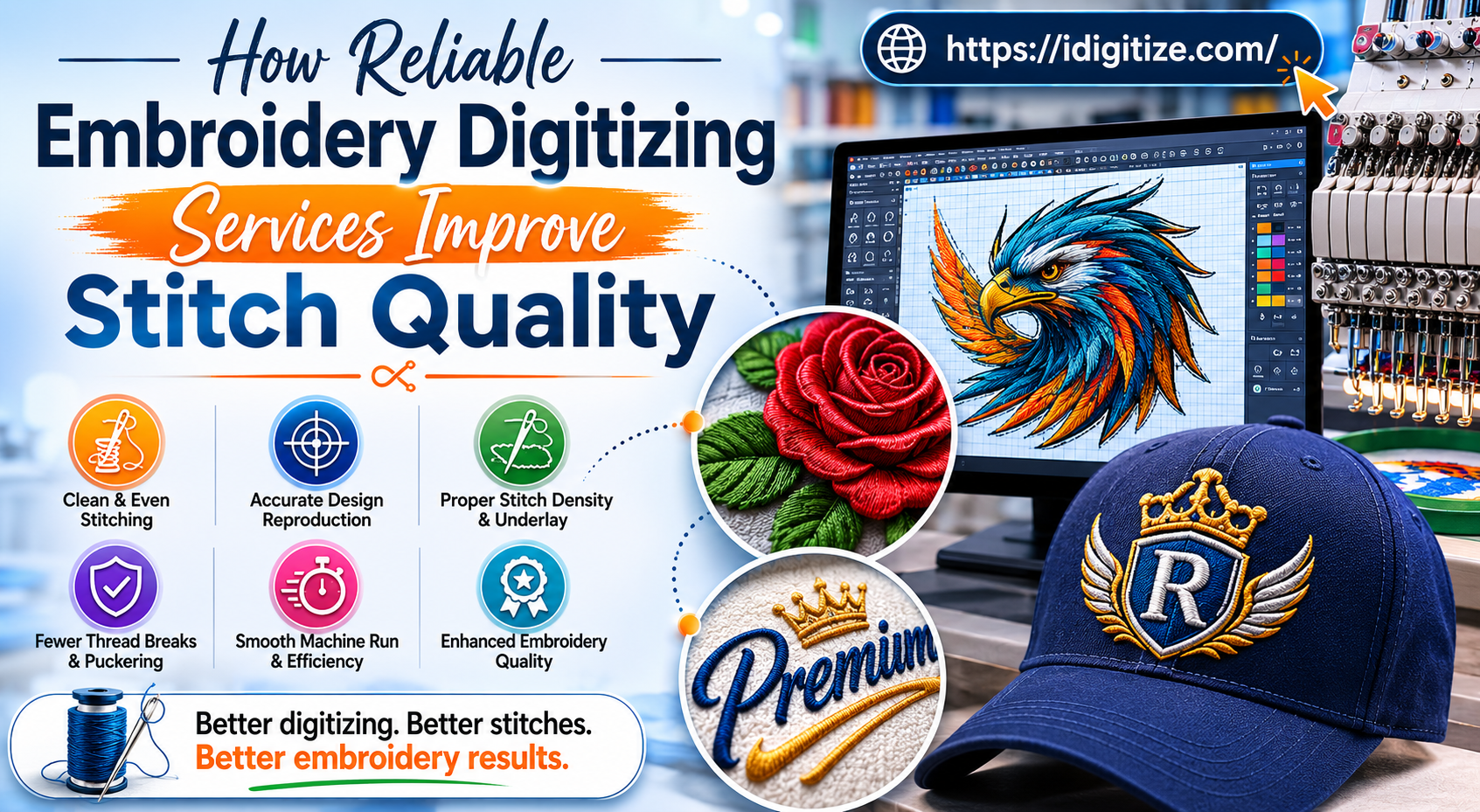
Embroidery quality depends on more than just the machine or thread being used. One of the most important factors behind clean and professional embroidery is the quality of the digitizing process.
Reliable embroidery digitizing services help transform logos and artwork into accurate stitch files that embroidery machines can read efficiently. Poor digitizing often leads to uneven stitching, thread breaks, fabric distortion, and inconsistent logo appearance.
In 2026, businesses in apparel branding, promotional products, uniforms, and custom embroidery rely on professional digitizing services to achieve smooth production and high-quality embroidery output.
This guide explains how reliable embroidery digitizing services improve stitch quality and why professional digitizing matters for commercial embroidery projects.
What Is Embroidery Digitizing?
Embroidery digitizing is the process of converting artwork into stitch files for embroidery machines.
Digitizers manually create stitch instructions that control:
- Stitch direction
- Stitch density
- Underlay settings
- Path sequencing
- Thread changes
These settings directly affect embroidery quality and machine performance.
Why Stitch Quality Matters
Stitch quality affects both appearance and durability.
Poor stitch quality can create:
- Uneven embroidery
- Distorted logos
- Thread breaks
- Fabric puckering
- Weak lettering clarity
High-quality stitching improves product presentation and customer satisfaction.
1. Reliable Digitizing Creates Better Stitch Pathing
Professional digitizers carefully plan stitch paths to ensure smooth embroidery flow.
Proper stitch pathing helps:
- Reduce unnecessary trims
- Minimize thread breaks
- Improve machine efficiency
- Maintain clean design structure
Poor pathing often creates messy and inconsistent stitching.
2. Correct Stitch Density Improves Embroidery Results
Reliable digitizing services adjust stitch density based on fabric type and design complexity.
Balanced density helps prevent:
- Fabric distortion
- Excess thread buildup
- Gaps in embroidery
- Heavy stitching problems
Professional density control creates cleaner and more durable embroidery.
3. Proper Underlay Increases Stability
Underlay stitches form the foundation beneath the top embroidery stitches.
Reliable digitizers use underlay to:
- Stabilize fabric
- Improve stitch alignment
- Support clean edges
- Increase design durability
Without proper underlay, embroidery may appear uneven or unstable.
4. Reliable Digitizing Improves Small Lettering
Small text is one of the most difficult parts of embroidery.
Professional digitizers improve lettering quality by:
- Adjusting stitch direction
- Simplifying tiny details
- Controlling density carefully
- Maintaining spacing accuracy
This ensures better readability on uniforms, caps, and promotional products.
5. Fabric-Specific Digitizing Reduces Problems
Different fabrics behave differently during embroidery.
Reliable digitizing services adjust files for:
- Stretch fabrics
- Caps
- Jackets
- Towels
- Performance apparel
Fabric-specific adjustments help reduce puckering and design distortion.
6. Clean Digitizing Reduces Thread Breaks
Thread breaks slow production and affect embroidery quality.
Reliable digitizers minimize thread breaks by:
- Optimizing stitch flow
- Reducing excessive density
- Using smooth stitch sequencing
- Eliminating unnecessary overlaps
This improves machine performance and production speed.
7. Accurate Stitch Angles Improve Design Appearance
Stitch direction and angles affect how embroidery reflects light and maintains texture.
Professional stitch angle management helps:
- Create smoother fills
- Improve visual depth
- Maintain design consistency
- Prevent uneven texture
Proper stitch angles improve the overall embroidery appearance.
8. Reliable Digitizing Improves Logo Consistency
Businesses need logos to appear consistent across all embroidered products.
Professional digitizing helps maintain:
- Accurate proportions
- Balanced lettering
- Consistent stitching
- Uniform design quality
Strong consistency supports better branding.
9. Professional Digitizing Supports Faster Production
Clean embroidery files improve machine efficiency and reduce production interruptions.
Reliable files help businesses achieve:
- Faster machine operation
- Fewer manual corrections
- Reduced downtime
- Improved workflow efficiency
Efficient production is important for commercial embroidery businesses.
10. Reliable Services Provide Testing and Revisions
Experienced digitizers often test files and provide revision support if needed.
This helps improve:
- Stitch accuracy
- Fabric compatibility
- Final embroidery quality
Revision support ensures the design performs correctly during production.
Common Problems Caused by Poor Digitizing
Low-quality digitizing may result in:
- Uneven stitching
- Distorted logos
- Excess thread trims
- Poor small lettering
- Fabric puckering
These issues increase production costs and reduce customer satisfaction.
Why Manual Digitizing Is Important
Manual digitizing provides better control over stitch settings compared to automatic software.
Professional manual digitizing ensures:
- Cleaner stitch flow
- Better fabric handling
- Improved design accuracy
- More production-friendly files
Auto-digitizing software often lacks the precision needed for commercial embroidery.
How Reliable Digitizing Helps Businesses
Professional embroidery quality improves:
- Brand presentation
- Product durability
- Customer confidence
- Production consistency
- Business reputation
Reliable digitizing becomes an important part of long-term embroidery success.
Conclusion
Reliable embroidery digitizing services play a major role in improving stitch quality, machine efficiency, and overall embroidery appearance. Professional digitizers carefully control stitch paths, density, underlay, and sequencing to create cleaner and more durable embroidery results.
In 2026, businesses that invest in reliable embroidery digitizing services achieve stronger branding consistency, fewer production problems, and better-quality embroidered products.
High-quality digitizing is not only about creating stitch files—it is about ensuring professional embroidery performance across every project.
FAQs
What is embroidery digitizing?
Embroidery digitizing converts artwork into stitch files that embroidery machines can read.
How does digitizing affect stitch quality?
Digitizing controls stitch paths, density, and sequencing, which directly affect embroidery quality.
Why is manual digitizing better than auto-digitizing?
Manual digitizing provides more accurate stitch control and better embroidery performance.
What causes poor stitch quality in embroidery?
Incorrect density, poor pathing, weak underlay, and bad sequencing often reduce stitch quality.
Can reliable digitizing reduce thread breaks?
Yes, professional digitizing improves stitch flow and reduces machine interruptions.